Train travel · Spain
Andalusia by train: from Málaga to Córdoba and Seville without a car
Train travel in Andalusia made simple: Málaga to Córdoba and Seville by AVE, Iryo and Renfe. Airports, tickets, prices and 2026 service updates.
Published on 10 min read
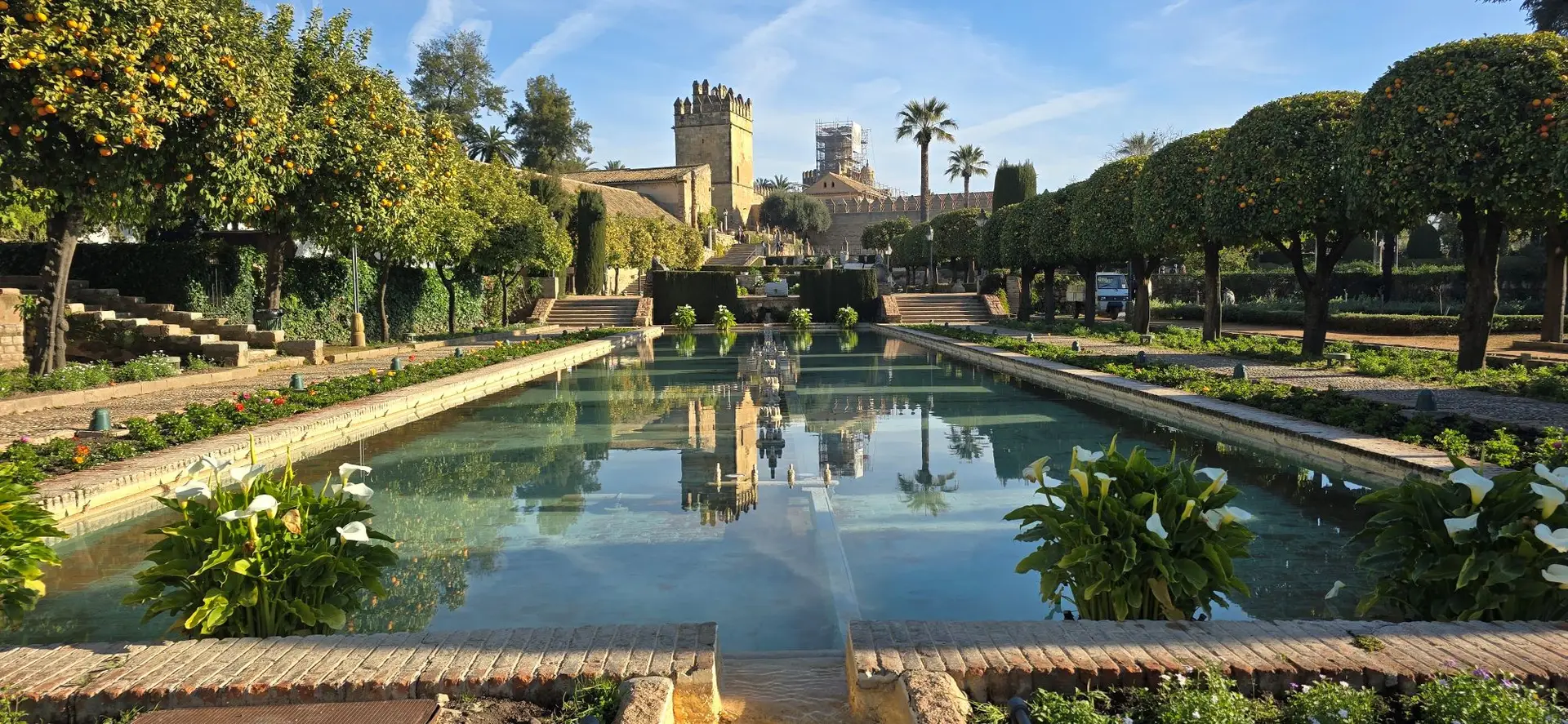
Why bring the stress of driving on holiday? Instead of renting a car, I chose a slower but far more comfortable way to travel across Andalusia: the train. No parking to hunt down, no rental paperwork, no wrong turns on unfamiliar roads — just board, sit back and watch the landscape pass. It turned out to be one of the better decisions I’ve made as a traveller, and I’d happily recommend it to anyone planning a trip through the region.
I’ll confess I nearly always prefer the train when travelling abroad, particularly when the alternative involves a hire car. No stress over unfamiliar traffic, no sat-nav abandoning you at the crucial moment, no mystery charges on the return. That said, trains abroad carry their own anxieties — delays, above all, and the nagging uncertainty of how to get from the airport to the city centre and back again.
In Andalusia, both worries turned out to be largely unfounded. The rail network works impressively well, especially on high-speed routes. AVE trains are so reliably punctual that operators offer a 50% refund for delays over 15 minutes and a full refund if the delay exceeds 30 — which tells you something about the confidence behind the timetable.
Airport connections, too, proved far less complicated than the scattered advice I’d found online had suggested. The train station at Málaga Airport is right outside arrivals, and getting to Seville’s airport turns out to involve nothing more daunting than a well-signposted bus.
Iryo, Renfe, AVE and Ouigo: which train operator should you choose?
Since 2021, the liberalisation of the European rail market has turned Andalusia into a genuine testing ground for competitive, sustainable travel. Alongside the long-established Renfe, operators Iryo and Ouigo España now compete for the main routes, creating a more dynamic landscape that works squarely in the traveller’s favour.
The figures are striking: ticket prices have fallen by around 28–30%, while passenger numbers have risen by a third. For anyone choosing to travel by train, that translates into more departures, sharper fares and a level of frequency that makes spontaneous itinerary changes entirely practical.
The Málaga–Córdoba corridor runs between 19 and 24 services daily, with a journey time of around 50 minutes. Córdoba–Seville is even more intensely served, nearly forty departures a day, with trains running every five to ten minutes at peak times. A density of connections that would have been unthinkable just a few years ago.
Iryo and Ouigo España focus primarily on AVE and AVANT services, while the historic Renfe retains its monopoly on Cercanías commuter lines, Media Distancia regional services and other specialist operations, whilst simultaneously competing on high speed under two distinct identities: the full-service AVE and the stripped-back Avlo.
On the Córdoba–Seville route alone, you can now choose between a Renfe AVANT, an equivalent Iryo service, or a budget Avlo. Same track, same speed, different price points and onboard experiences depending on the operator.
Iryo was my choice for the Córdoba–Seville leg, and it delivered. Timetable and price aligned with what I needed, and the train itself was a pleasant surprise, not least because it is, quite literally, an Italian one. The rolling stock is Trenitalia‘s Frecciarossa 1000, the logo still visible on the carriages. The service reflects that heritage: an intuitive app, ergonomic seating, complimentary wi-fi and onboard entertainment. Three classes are available: Infinita (first), Singular (business) and Inicial (standard). Punctuality was faultless, and the attention to passenger service was tangible rather than merely promised.
Ouigo España represents the democratisation of high speed: vivid blue trains, an informal atmosphere and fares from around €7 if you book early. In Andalusia, the number of Ouigo services is still relatively modest. The model follows the French low-cost philosophy: extra luggage charged separately, fixed but comfortable seating, a younger and budget-conscious target demographic.
Avlo, Renfe’s own low-cost arm, is the established operators’ answer to the budget competition: high-speed travel at economy prices, online-only booking and pared-back onboard services. Its main advantage over Ouigo lies in the breadth of its network and its seamless integration with the wider Renfe ecosystem, useful if your journey involves a connection.
Important update
Important update: the state of Andalusia’s rail network in 2026
This article was written following a personal journey through Andalusia, and the practical experience it describes remains valid. However, the regional rail network has undergone serious disruption in the months since, and it would be wrong to publish without addressing it honestly.
On the evening of 18 January 2026, two high-speed trains collided near Adamuz, close to Córdoba, on the Madrid–Malaga line, killing 45 people and injuring more than 150. The trains involved were an Iryo service travelling from Málaga to Madrid, carrying 317 passengers, and a Renfe Alvia heading in the opposite direction towards Huelva . To everyone who lost their lives, and to the families left behind: my deepest and most sincere condolences.
The causes of the accident remain the subject of an ongoing investigation; early findings point to a possible infrastructure fault on a section of track that had already experienced difficulties during 2025. Spain’s Transport Minister described the incident as “very strange,” given that the Iryo train was practically new, the track had been renewed just months earlier, and the collision occurred on a straight section of line.
The disruption did not end there. In early February 2026, a landslide caused by heavy rainfall collapsed a retaining wall near Álora, cutting the high-speed connection between Málaga and Madrid, with rail replacement coaches introduced between Málaga and Antequera.
Adif confirmed that the direct AVE service will not resume before the last week of April 2026; engineers discovered the structural damage was far more extensive than initially assessed, and full repairs to the infrastructure are not expected until the end of the year.
What this means for travellers planning a trip now: the Córdoba–Seville route and the Cercanías airport line in Málaga are operating normally and are unaffected by these disruptions. Anyone with tickets on the Madrid–Málaga high-speed route should verify the current situation directly on Renfe.com or Iryo.eu before travelling.
Málaga airport to city centre by train: Cercanías C1 guide
After the inevitable long walk through baggage reclaim at Málaga Airport, the signs for Railway/Renfe appear once you reach the main exit and what follows is one of the most straightforward airport connections in southern Spain.
The Cercanías C1 is Andalusia’s suburban rail network, directly comparable to a British commuter line but rather more modern and reliable. From the Aeropuerto stop, which is right outside Terminal 3, a two-minute walk from arrivals, trains run every 20 minutes to the city, with just two stops of interest: Málaga María Zambrano (8 minutes) is the main intercity hub, where high-speed AVE trains depart for Córdoba, Seville, Madrid and beyond. If you’re connecting straight onto a high-speed service, alight here. Málaga Centro-Alameda (12 minutes) is the better stop for the historic centre, a ten-minute walk from the Cathedral, the Alcazaba and most hotels in the old town.
Tickets cost €1.80 and can be bought at the platform machines, which accept contactless payment. No queuing, no confusion. The only practical limitation worth knowing: there are no left-luggage facilities at María Zambrano station itself. If you need to store bags before your high-speed train departs, there are paid lockers near the Perchel metro stop, or you can use the bus station next door.
Málaga to Córdoba by train: journey time, tickets and what to expect
My journey began on an early afternoon, timed to allow a leisurely lunch and absorb any residual delays from the flight, while still arriving in Córdoba with a good few hours of daylight ahead.
What followed was one of the more quietly spectacular train journeys I’ve taken in Europe. For fifty minutes, the window frames row upon row of olive trees, perfectly aligned, silver-grey in the afternoon light, rippling across ochre hills towards the horizon, broken only by whitewashed farmhouses. You sit back and let Andalusia come to you. A note on luggage: check the fare conditions when booking. My ticket included a carry-on bag, but a second piece of luggage required a small supplement. This is standard across most operators but varies by fare class — worth confirming at the point of purchase.
Córdoba train station to city centre: how far and how to get there
Córdoba has a single main station, located roughly 1.5 kilometres from the medieval quarter. The 20-minute walk through the Jardines de la Victoria turned out to be one of the unexpected highlights of the entire trip. Having arrived from the grey flatness of the Po Valley in northern Italy, I found myself suddenly immersed in avenues of orange trees heavy with fruit, immaculate flowerbeds, and the gradual transition from contemporary architecture to the ancient stone of the Judería.
That said, the old town’s maze of medieval alleyways is largely inaccessible by public transport: the streets are simply too narrow. If you’re carrying large bags and would rather not walk, taxis in Spain are reasonably priced and widely available just outside the station.
Córdoba to Seville by train: timetable and journey tips
The Córdoba–Seville leg is less cinematically dramatic than the Málaga run, but the 45 minutes passed quickly, enough time to go through the morning’s photographs from the Alcázar de los Reyes Cristianos and eat a belated lunch. The service was punctual to the minute.
Seville Santa Justa is the logistical heart of the Andalusian rail network. The station is well equipped: comfortable waiting areas, restaurants, shops and, crucially, left-luggage options in the surrounding streets and handles arrivals and departures with a smoothness that makes changing services straightforward even with luggage. It sits around 2 kilometres from the historic centre, well connected by bus or taxi (10–15 minutes); those happy to walk can follow the Avenida Kansas City for a pleasant 30-minute stroll into the old town. The smaller San Bernardo station, closer to the centre, serves regional and Media Distancia services: useful if you’re planning day trips to secondary Andalusian towns, but not relevant for high-speed travel to Córdoba or Madrid.
How to get from Seville city centre to the airport
Returning to the airport from Seville was the part of the trip I’d been most apprehensive about, since, unlike Málaga, Seville Airport has no direct rail link to the city centre. The solution turned out to be simpler than expected.
The EA bus, run by Seville’s public transport operator TUSSAM, departs from Plaza de Armas bus station and stops at Santa Justa train station. Services run every 30 minutes, the journey takes around 45 minutes, and tickets can be purchased on board by contactless card or inside the station. The bus passes through a broad sweep of the city, offering one last look at Seville from ground level which, if you’re leaving reluctantly, is either a comfort or a mild cruelty depending on your temperament.
Plaza de Armas also has a left-luggage facility, which I used for my last full day in the city, an arrangement that worked perfectly.
Train tickets in Andalusia: prices, operators and when to book
Spanish train operators use the same dynamic pricing model as budget airlines: the same train, the same seat, at half the price if you book three weeks in advance rather than three days. For travel in low season, February in my case, last-minute availability was still reasonable, but popular routes at peak times (Easter, summer, long weekends) fill up quickly, and the cheapest fares disappear first.
For booking, I would always recommend going directly to the official operator websites: Renfe.com, Iryo.eu and Ouigo.es. It is the safest approach in the event of any disruption, change or refund request, since you deal with the operator directly rather than through an intermediary. All three sites handle international credit cards without difficulty.
On luggage: AVE and Iryo (in Singular and Infinita classes) are reasonably generous, but Avlo and Ouigo operate strict low-cost luggage policies: oversized bags carry a significant surcharge. Check the conditions carefully when booking, particularly if you’re travelling with larger cases.
There is also a dimension to train travel that no booking platform can quantify: the quality of the transition between one place and another. Each journey in Andalusia felt like a genuine interval, a moment to let one city settle before the next one began. From Córdoba’s intimacy to Seville’s grandeur, from the contemplative silence of the patios to the full-throated energy of the Triana bars, the train made those contrasts feel earned rather than instant.
From a purely practical standpoint, the carbon case for rail is also worth noting: travelling by train rather than a hire car produces around 86% fewer CO₂ emissions per kilometre. For anyone who weighs environmental impact alongside comfort and cost, the train wins on every count.
Practical summary
Quick reference: Andalusia by train
| Route | Duration | Daily services | Operators |
|---|---|---|---|
| Málaga Airport → City centre (María Zambrano) | 8 min | Every 20 min | Cercanias C1 |
| Málaga → Córdoba (AVE) | ~50 min | 19-24 trains | Renfe, Iryo, Avlo |
| Córdoba → Seville (AVE) | ~45 min | ~40 trains | Renfe, Iryo, Ouigo, Avlo |
| Seville → Airport (EA bus) | ~45 min | Every 30 min | Bus EA from Plaza de Armas/Santa Justa |
Ticket prices: from approximately €7–9 on Ouigo/Avlo booked in advance; €15–30 on Iryo and AVE Renfe. Prices rise significantly with shorter booking windows and during peak periods.
Where to book: Renfe.com, Iryo.eu and Ouigo.es.
March 2026 update: The direct AVE service between Málaga and Madrid is suspended until at least late April due to structural works following the Álora landslide. The Málaga–Córdoba–Seville corridor and all Cercanías airport services are unaffected. Always check current service status before travel.

The manual
Andalusia in Treno
If you like this kind of travelling and you’re planning a tour by train between Malaga, Cordoba and Siviglia, in “Andalusia in Treno” you can find all you need: strategies, checklists and an Excel template to plan the trip and manage the budget.
Shop on AmazonRelated articles
More articles to read
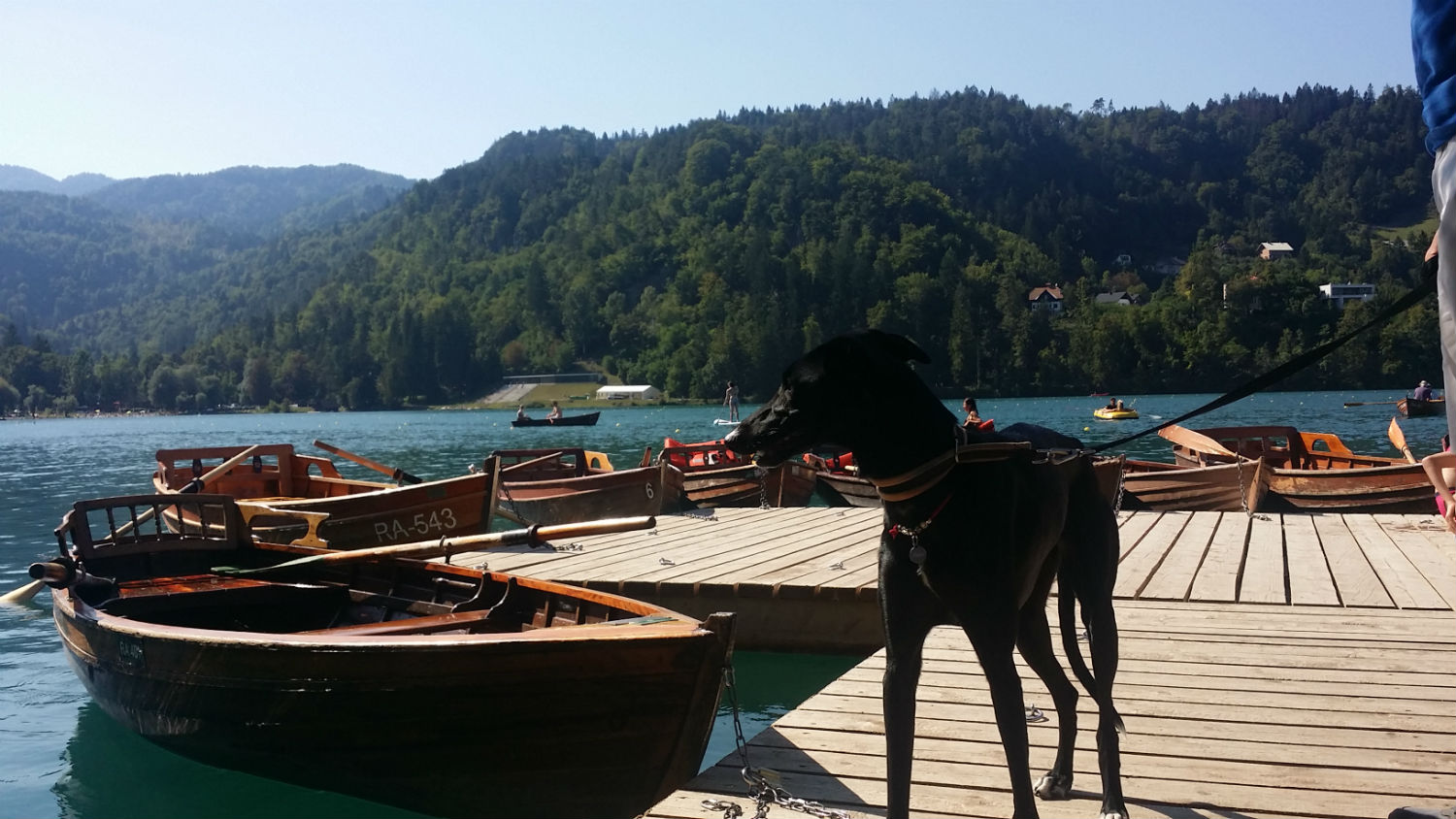
Slovenia with a Dog: Our 5-Day Road Trip Itinerary
A first-hand five-day road trip through Slovenia with a medium-sized dog, including the route, accommodation choices and current access rules.
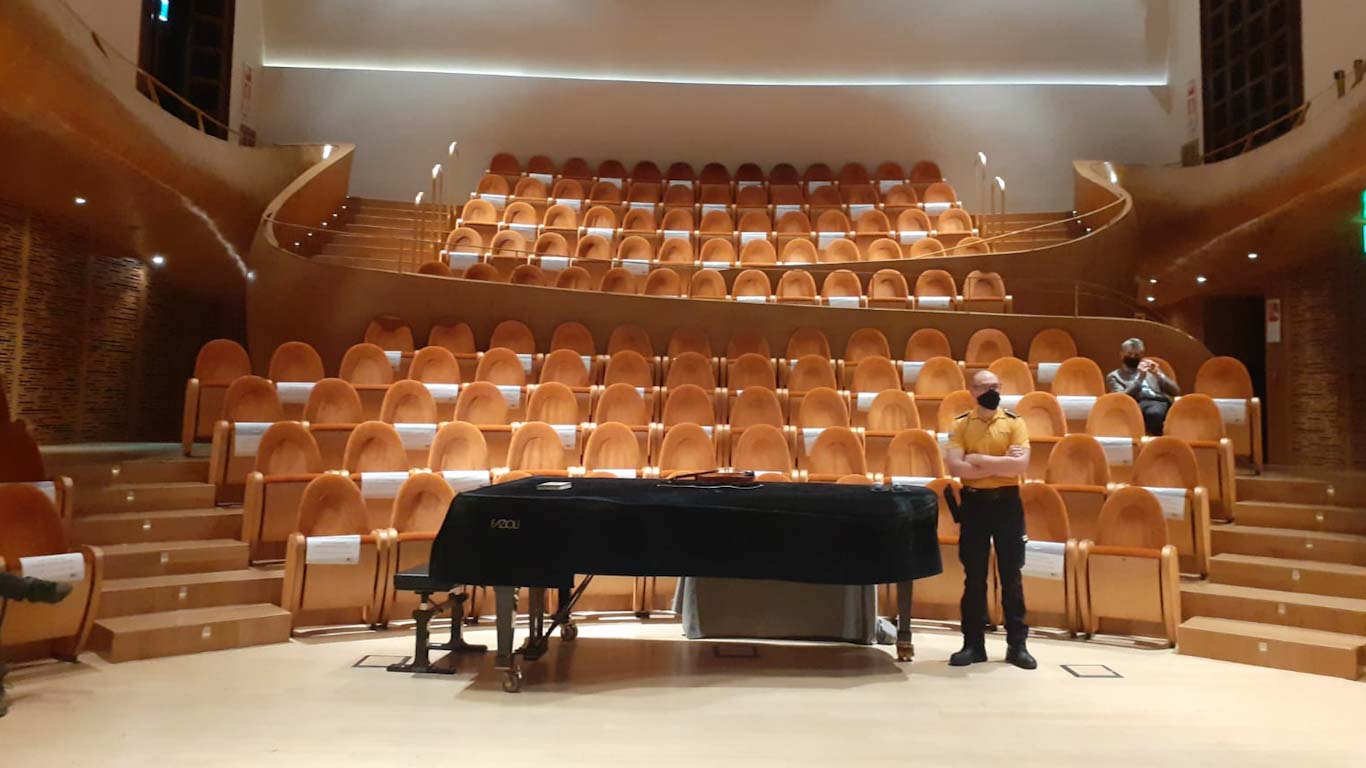
The sound of a Stradivarius at the Violin Museum of Cremona
Because, if you listen to it, Cremona can hit you right in the heart. When Lena Yokoyama began to play, I felt…
Keep travelling
More stories like this one from Spain
Get new itineraries, practical notes and updates on the CorSara guides.
The sign-up form is provided by MailerLite. To respect your cookie preferences, I load it only when you switch it on.